In the
next few months I will be working for Photovoice
as an assistant facilitator in the Lookout UK Project. I will be showing youngsters (13 to 25 years old) how to use a
camera and how to feed into the debate around gangs and knife crime
through photography. I have already helped in two Taster Workshops and I am
really looking forward to working with them throughout the whole project.
Sunday, 15 July 2012


Saturday, 14 July 2012


Wednesday, 7 March 2012
Shooting celebrities for Revolver Entertainment at Payback Season Premier
Nicola Burley, Sir Geoff Hurst and Adam Deacon amongst many others.


Friday, 3 February 2012
Photo on the cover of a Swedish magazine


Thursday, 20 October 2011
Rwandese survivors of the genocide still at risk
While working for the Uganda Red Cross I interviewed and photographed Rwandese refugees in Kyaka II Refugee Settlement. See http://www.eyesofchange.com/rwanda

Rwandese refugees in Uganda facing forced return as the cessation clause is invoked.
During the 1994 genocide and aftermath, thousands of Rwandese fled to neighboring countries to escape violence and death. Many Rwandese refugees entered Uganda and started living in designated settlements. The persecution did not stop though. The Rwandese government started chasing refugees in the vicinity a few years later. In Uganda it happened in the form of forced repatriation. In 2003, the governments of Rwanda and Uganda and the UNHCR signed an agreement to repatriate about 30,000 refugees living in Uganda. There have been repeated attempts to forcibly return refugees to Rwanda in 2004, 2005, 2006, 2010 and 2011. Also, since 2010 all refugees from Rwanda were prohibited from cultivating their land in Kyaka II settlement, which makes their livelihoods even more challenging. The cessation clause, by which Rwandese refugee status would be brought to an end by 31 December 2011, is also being invoked. Therefore, currently thousands of Rwandese refugees face the risk of having to return to their country when there have not been substantial, effective and durable changes to ensure their safety upon return.
Why am I here? Why am I in this settlement? Why am I in Uganda?
While working for the Uganda Red Cross I interviewed and photographed refugees from Congo, living in Kyaka II Refugee Settlement. See: http://www.eyesofchange.com/congo

Congo: a war that never seems to end. A constant flow of asylum seekers.
“I do not know the real cause of war. It has been ongoing for so many years”, says a Congolese refugee.
Congo. A vast country. Lots of minerals. Illegal exploitation of natural resources. Many tribes. Tribal war for decades. War is part of Congolese’s past and present. Guns, bullets, killings, chopping of bodies and violence. Fear, torture, rape, sacking, prison, child soldiers, forced recruitment.
Kyaka II. A refugee settlement. Set up in 1967. 81 km2. More than 15.000 refugees. Western Uganda. 9 zones, each with 4-6 villages. 5 primary schools. 90% of the refugees are from Congo.
Bare houses. No windows. No bed. No mattress. No chair. No table. No food. No electricity. No water. Sometimes a calendar or a poster on the wall. 1 or 2 pieces of clothes.
Strong people. Fled from war. Ran away at gunpoint. Suffered torture, bad and inhuman treatment. Escaped. Walked for days without any personal belongings to cross a border in the hope of safety. Lost members of the family. Had to leave them behind. Miss the relatives and friends.
People who have no option but to rely on foreign aid. Granted a small piece of land in Uganda. Barely able to live out of subsistence. Policies that do not help them to become self-reliant. Bad treatment for some, a safe heaven for others. Hoping to return to their country of origin. Simply willing to live in peace. Wishing to be re-settled to another country.
Monday, 17 October 2011
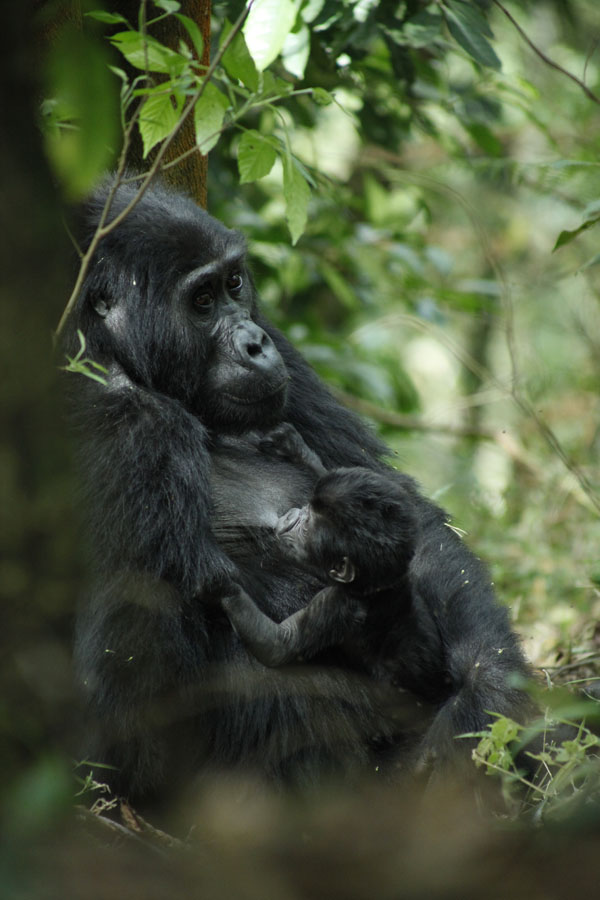
A special encounter: Mountain Gorillas in Bwindi Impenetrable Forest in Uganda.
Gorillas are huge, robust and furry. It is amazing to actually be able to get as close as 4 metres from such large forest animals. Gorillas are docile, peaceful, relaxed, lazy and slow. Each of their movements is carefully though as if not to spend energy unnecessarily. Gorillas enjoy loving and caring for their families. In between eating leaves and more leaves, gorillas cuddle and hug each other with a lot of affection.
Mountain gorillas live in groups (from 8 to 40 individuals) and there are usually between 1 and 3 silverbacks – the strong dominant males. This group I saw is called Oruzogo.




Friday, 30 September 2011
Re-discovering myself: I do love teaching children
I taught a few classes this week and had a really great time. I had almost forgotten how good it is to see children learning, laughing and learning. I absolutely love teaching!

I taught about road safety and first aid for children in public primary schools in Fort Portal, Western Uganda. Children learnt about how to keep safe at home (water boiling, knifes, glass bottles etc) by identifying the 10 errors/dangers in a kitchen illustration. And they learnt about the importance of paying special care when crossing roads, leaving a vehicle or playing soccer.


The classes were very interactive and children coloured the beautiful illustrations that myhusband had prepared.


Monday, 26 September 2011
Commissioned to photograph and interview beneficiaries of Uganda Red Cross Rural Water and Sanitation Project
A 3-year project, funded by the European Commission and the Danish Red Cross, aimed to improve the water supply, sanitation coverage and hygiene practices in cholera-prone areas of Western Uganda. The project covered 5 districts: Buliisa, Bundibugyo, Hoima, Kabarole and Kasese. In the past this region on the shores of Lake Albert was repeatedly the origin of cholera outbreaks, which spread to other regions of Uganda.


Access to clean and safe water was limited to only 42% of the population. A large number of people fetched water from ponds, swamps, rivers and lakes, which contributed to the high cases of diarrhea and other water and hygiene diseases. It was common to have to walk 3-4 hours a day to fetch water.


More than 700 boreholes and shallow wells have been drilled in these districts since the project started and people have been trained on sanitation and hygiene practices.


Women and children now fetch water from boreholes and shallow wells early in the morning and late afternoon. They use the water for cooking, bathing, washing and drinking. As pointed out by Patrick, District Water Officer, the water coverage is now 72% and there are no more cholera outbreaks in the region.


The benefits of the project have already been widely perceived by the water user communities. Distances are much shorter. It now only takes approximately 10 minutes for people to walk to the closest borehole. Public health has improved. Christopher, community leader says “The last case of cholera in our community was a year ago, just before the shallow well was drilled.”
Irene, 30 years old, 3 children, fetches water from a borehole in Buliisa district three times a day. She used to fetch water from the river, but prefers the borehole water: “It is good for drinking. It’s safe. Before, my children used to have stomachache and diarrhea. Now they do not get sick anymore.” Frank, Red Cross volunteer and Project Lead, complements: “Reduced cases of diarrhea translate into higher school attendance”.


This project was implemented by the Uganda Red Cross in partnership with the beneficiary communities. Communities took part in planning, selection of technologies and, as per national sector policy, they are responsible for operating and maintaining the infra-structure created by the project. One of the key challenges of the project remains the functionality of Water User Committees. As the project approaches its end, communities, which benefited from the installation of the boreholes and shallow wells, need to appropriate this infra-structure and maintain it.
Subscribe to:
Posts (Atom)